Market Me Good

Author name: kane

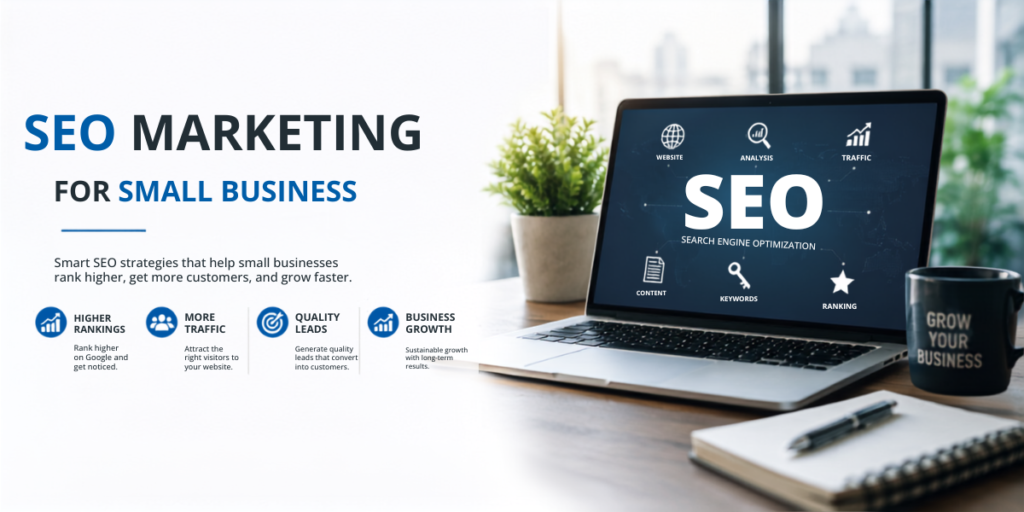
SEO marketing for small business with laptop, search optimization, higher rankings, traffic, and business growth
Uncategorized

SEO Marketing for Small Business

SEO Marketing for Small Business: A Complete Guide Digital Happiness — Blog FAQ Free Audit Small Business Growth Guide SEO Marketing for Small Business: A Complete Guide to Growing Online Everything a small business owner needs to rank higher on Google, attract more local customers, and turn search traffic into real sales — no jargon required. Updated August 2026 12 min read Small Business SEO Sample Google Ranking #52 → #52 Keyword: “bakery near me” ▲ 49 spots In This Guide What Is SEO Marketing for Small Business? Why SEO Is Important for Small Businesses Key SEO Strategies to Follow Local SEO: Your Secret Weapon Mistakes to Avoid & Choosing an Agency Frequently Asked Questions SEO marketing for small business is one of the highest-return investments a local company can make. While big brands spend millions on national ad campaigns, small businesses win by showing up exactly when a nearby customer searches for what they sell — a plumber, a bakery, a law firm, a boutique. Search engine optimization makes that possible by improving how a website ranks in Google’s organic results. Unlike paid ads that stop the moment a budget runs out, SEO builds visibility that compounds over months and years. It increases website traffic, earns customer trust, and turns “just browsing” searchers into paying customers. This guide breaks down exactly how small business SEO works, the strategies that matter most, and how to avoid the mistakes that quietly waste marketing budgets. GOOGLE RANK #3 Hero image: small business owner reviewing SEO analytics on a laptop with Google ranking graphs hero-seo-marketing-small-business.jpg 01 · The BasicsWhat Is SEO Marketing for Small Business? SEO marketing for small business means optimizing a website, its content, and its technical structure so search engines like Google understand what the business offers — and rank it higher for the searches that matter most. The goal is simple: appear at the top when a potential customer searches for the product or service being sold. How SEO Works in Simple Terms Search engines crawl billions of pages and rank them using hundreds of signals: relevance, page speed, mobile-friendliness, backlinks, and content quality. Website SEO is the practice of aligning a site with those signals so it earns a higher position for relevant searches. On-Page vs Off-Page vs Technical SEO On-page SEO — optimizing titles, headings, and content on each page. Off-page SEO — building authority through backlinks and mentions. Technical SEO — fixing site speed, mobile usability, and crawlability. SEO vs Paid Advertising Both search engine optimization and paid ads can drive traffic, but they work differently. Paid ads deliver instant visibility that disappears when spending stops. Organic traffic from SEO keeps arriving long after the initial work is done, which is why most small business digital marketing plans use both together. Expert Tip Start with one clear, high-intent keyword tied to your main service. Ranking well for one keyword builds the authority that makes every keyword after it easier to rank for. 02 · ImpactWhy SEO Is Important for Small Businesses Most customers begin their buying journey with a search engine. For a small business, ranking on page one isn’t a nice-to-have — it’s often the difference between being found and being invisible. 93% of online journeys start with a search engine 75% of users never scroll past page one 28% of local searches lead to a purchase within a day Increased Online Visibility Ranking higher puts a business directly in front of people already looking to buy, without competing on ad spend alone. Cost-Effective Long-Term Growth Once a page ranks well, it can continue generating organic traffic for months or years with minimal ongoing cost — a major advantage for lean small business budgets. Building Trust and Credibility Customers tend to trust organic results more than ads. A strong ranking signals authority before a customer ever visits the site. Leveling the Playing Field with Big Brands Local SEO for small business lets a neighborhood shop outrank national chains for searches that matter in its own area, like “coffee shop near me.” Key Takeaway SEO puts a business in front of people who are already searching to buy. Rankings compound over time, unlike paid ads. Organic results build more trust than paid placements. 03 · ExecutionKey SEO Strategies Every Small Business Should Follow Effective small business SEO isn’t about doing everything at once — it’s about doing the right things consistently. These five strategies form the foundation of nearly every successful campaign. 1. Keyword Research Identify what customers actually type into Google, prioritizing keywords with buying intent over broad, high-competition terms. 2. On-Page Optimization Optimize page titles, meta descriptions, headers, and content so each page clearly targets one primary topic. 3. Technical SEO Basics Ensure the site loads quickly, works on mobile, and is easy for search engines to crawl and index. 4. Content Marketing Publish helpful blog posts, guides, and FAQs that answer real customer questions and naturally include organic traffic keywords. 5. Link Building Earn backlinks from reputable local and industry sites to build the authority Google rewards with higher rankings. 01 Keyword Research 02 On-Page SEO 03 Technical SEO 04 Link Building 05 Results SEO process infographic: Keyword Research → On-Page SEO → Technical SEO → Link Building → Results seo-process-infographic-small-business.jpg 04 · Local AdvantageLocal SEO for Small Businesses For most small businesses, local SEO delivers the fastest, most direct return. It focuses on capturing customers searching in a specific city or neighborhood — exactly the audience most likely to visit or call. Google Business Profile Optimization A complete, accurate Google Business Profile with photos, hours, and categories is often the single biggest local ranking factor. Local Citations and NAP Consistency Keeping the business Name, Address, and Phone number (NAP) consistent across directories builds the trust signals Google uses for local rankings. Customer Reviews and Reputation Fresh, genuine reviews improve local rankings and give new customers the confidence to choose the business over a competitor. Local Keyword Targeting Using city and neighborhood
Meta ads
Uncategorized

Meta Ads Services That TurnΒ Scrolls Into Sales

Meta Ads Services | Facebook & Instagram Advertising That Converts Digital Happiness Book a free strategy call β†’ Meta Ads Services Meta Ads Services That Turn Scrolls Into Sales Digital Happiness plans, builds, and manages high-performing Facebook and Instagram advertising campaigns β€” so you get more leads, more sales, and real brand growth from every rupee you spend. Read time 7 min Category Paid Social Media Advertising Updated August 2026 Campaign live Meta Ads Manager Campaign Festive Sale β€” Retargeting (IG + FB) Reach 0 CTR 0% Cost / Lead β‚Ή0 ROAS 0x On this page What Are Meta Ads Services? Why Invest in Meta Ads Types of Meta Ads How Meta Ads Work Choosing the Right Agency FAQs If your customers are on Instagram and Facebook β€” and almost all of them are β€” Meta Ads Services are how you reach them with the right message at the right moment. Meta Ads Services cover everything involved in planning, launching, and managing paid campaigns across Facebook and Instagram: strategy, creative, audience targeting, budget management, and ongoing optimization. For a growing brand, that combination of reach and precision is hard to match anywhere else. Organic posts alone no longer guarantee visibility. Facebook and Instagram now reward paid promotion with sharper targeting, faster results, and detailed performance data. That’s why business owners, eCommerce brands, and marketing managers are shifting real advertising budget into paid social media advertising β€” and why a well-run Meta Ads Services program has become one of the fastest ways to grow predictably online. Placement β€” Hero Banner A business team reviewing Meta Ads dashboards on a laptop and mobile screen, in a bright modern office setting. Alt text: Team managing Meta Ads Services campaign dashboard Filename: meta-ads-services-dashboard-team.jpg What Are Meta Ads Services? Meta Ads Services refer to the professional management of paid advertising across Meta’s platforms β€” Facebook, Instagram, Messenger, and the Audience Network. A specialist agency handles the strategy and the daily execution, so your campaigns run on data instead of guesswork. Facebook Ads Agency Work A Facebook Ads Agency builds campaigns around your specific goal β€” traffic, leads, or sales β€” and structures your account so every ad has a clear job to do. Instagram Ads Services Instagram Ads Services turn Reels, Stories, and feed posts into shoppable, trackable placements that reach a highly visual, mobile-first audience. Meta Ads Management Meta Ads Management is the ongoing part of the job: budget pacing, bid adjustments, creative testing, and reporting, week after week. Paid Social Media Advertising, Combined Together, this is what paid social media advertising looks like when it’s done properly β€” one connected strategy across two of the world’s largest platforms. Expert tip Run Facebook and Instagram placements from a single campaign whenever possible. Meta’s algorithm shifts budget toward whichever platform performs best in real time, which usually lowers your overall cost per result. Why Businesses Should Invest in Meta Ads With more than 3 billion people using Meta’s platforms every month, the reach is unmatched. But reach alone isn’t the reason businesses invest β€” precision is. Precise Audience Targeting You can reach people by location, age, interests, past purchase behavior, or even by uploading your existing customer list to find people who look just like your best buyers. Cost Efficiency at Any Budget Campaigns can start small and scale as they prove themselves, which makes Meta Advertising accessible to startups and local businesses, not just large brands. Real Scalability A campaign that works with β‚Ή500 a day can often be scaled to β‚Ή5,000 a day without losing performance, as long as it’s optimized correctly. Measurable, Transparent ROI Every rupee spent is trackable β€” impressions, clicks, add-to-carts, and purchases are all visible in one dashboard, in real time. Placement β€” After “Why Invest” section Meta Ads funnel infographic showing three stages: Awareness, Consideration, Conversion. Alt text: Meta Ads Services funnel from awareness to conversion Filename: meta-ads-funnel-awareness-conversion.jpg Factor Meta Ads Traditional Advertising Audience Targeting Highly precise β€” by interest, behavior, location Broad, largely untargeted Cost Flexible, starts small High fixed cost upfront ROI Trackable to the rupee Difficult to isolate Measurability Real-time dashboards Delayed, estimated Scalability Scale up or down instantly Slow, contract-bound Types of Meta Ads Meta gives advertisers several ad formats, and choosing the right mix is a core part of any Facebook Advertising Agency’s strategy. Image Ads Simple, fast to produce, and effective for driving traffic or building awareness. Video & Reels Ads Short-form video consistently earns the highest engagement across Instagram Marketing campaigns today. Carousel Ads Multiple images or products in one ad β€” ideal for showcasing a full product range. Collection & Catalog Ads Built for eCommerce, these pull directly from your product catalog and create a shoppable browsing experience. Lead Ads Capture contact details without sending users off Facebook or Instagram β€” ideal for service businesses. Key takeaways Video and Reels ads currently deliver the strongest engagement rates. Catalog ads work best for eCommerce brands with large product ranges. Lead ads reduce friction for service-based businesses collecting inquiries. How Meta Ads Work: Targeting, Pixel & Optimization Behind every successful campaign is a system β€” audience data, tracking, and continuous optimization working together. Advanced Audience Targeting Meta Ads Management starts with layering demographics, interests, and behaviors, then refining further with lookalike audiences built from your best existing customers. Meta Pixel & Conversion Tracking The Meta Pixel is a small piece of code placed on your website that tracks what visitors do after clicking an ad β€” page views, add-to-carts, and purchases β€” feeding that data back into the algorithm to find more people likely to convert. Campaign Optimization An agency doesn’t “set and forget” campaigns. Budgets shift, underperforming ads pause, and new creative rotates in weekly based on real performance data. Common Mistakes Businesses Make Launching ads without installing the Meta Pixel first. Targeting audiences too broad or too narrow. Changing campaigns daily instead of letting the algorithm learn. Using the same creative for too long, causing ad fatigue. Placement β€”

Uncategorized

How Digital Marketing Can Increase Brand Awareness and Sales DIGITAL MARKETING STRATEGY How Digital Marketing Can Increase Brand Awareness and Sales Visibility without a path to purchase is just noise. Here’s how the right mix of channels builds recognition first, then quietly turns that recognition into revenue. 9 MIN READ Β· MARKETING STRATEGY Β· UPDATED AUG 2026 Most businesses don’t lose customers because their product is weak β€” they lose them because nobody knew the product existed in the first place. That’s the gap digital marketing is built to close. Done well, it does two things at once: it puts your brand in front of the right people repeatedly enough that they recognize it, and it builds the mechanics β€” landing pages, retargeting, email flows β€” that turn that recognition into an actual purchase. This guide walks through exactly how that works: the channels that build awareness, the systems that convert it into sales, and the mistakes that quietly waste budget along the way. If you’re also refining the fundamentals, our on-page SEO checklist and content marketing strategy guide pair well with everything below. WHY IT MATTERSWhy Brand Awareness Is the First Domino Brand awareness is the simple measure of how many people in your target audience recognize your name, logo, or product when they see it. It sounds soft compared to a sales number, but it’s the variable that makes every other marketing channel cheaper and more effective. A recognized brand gets more clicks per impression, a higher click-through rate on ads, and more trust at the point of checkout β€” all without raising spend. Recognition lowers the cost of everything downstream When someone has seen your brand three or four times before they land on your site, they convert faster and second-guess less. That’s why awareness campaigns and performance campaigns shouldn’t be run as separate budgets β€” awareness is what makes performance marketing perform. Trust compounds over repeated exposure People rarely buy from a brand the first time they encounter it. Research on the “rule of seven” in marketing suggests it typically takes multiple touchpoints before a prospect feels comfortable purchasing. Digital channels are what make repeated, low-cost touchpoints possible at scale. Want a channel plan built for your brand? Get a free audit of your current marketing mix and a prioritized 90-day plan. Get Your Free Marketing Audit THE CHANNELSThe Core Digital Marketing Channels That Build Awareness Awareness isn’t built by one channel β€” it’s built by a handful of channels reinforcing the same message in different formats. Here are the ones that carry the most weight. Search engine optimization (SEO) SEO puts your brand in front of people at the exact moment they’re searching for a solution. Ranking for the right keywords means your name shows up repeatedly for your most relevant audience, at close to zero marginal cost per impression. Our SEO vs. paid search breakdown covers how to split budget between the two. Content marketing Blog posts, guides, and videos give people a reason to engage with your brand before they’re ready to buy. Consistent, useful content is what makes a brand feel like an authority rather than just another ad. Social media marketing Social platforms are where brand personality shows up most clearly. Short-form video and community engagement are currently the highest-leverage awareness formats β€” see our social media trends roundup for what’s working right now. Paid advertising Paid search and social ads let you manufacture reach on demand instead of waiting for it to build organically. It’s the fastest way to get initial visibility while organic channels mature. Fig. 1 β€” Awareness channels working together instead of in isolation. THE CONVERSION BRIDGETurning Awareness Into Sales: The Conversion Bridge Awareness gets people to notice you. A conversion system is what gets them to buy. Without it, awareness campaigns generate impressions and vanity metrics but never touch revenue. Here’s the bridge that connects the two. Retargeting keeps warm traffic warm Most visitors don’t buy on their first visit. Retargeting ads keep your brand visible to people who already showed interest, which is consistently one of the highest-ROI tactics in digital advertising because you’re only paying to reach people who are already primed. Email nurtures the middle of the funnel Email remains one of the highest-return channels because it lets you follow up without paying per impression. A well-built welcome sequence and post-purchase flow can do more for lifetime value than most single ad campaigns. Our email automation playbook walks through building these flows from scratch. Landing pages matched to the exact ad or post that drove the click, not a generic homepage. Clear, singular calls to action on every page β€” one next step, not five. Social proof (reviews, case studies, logos) placed right before the point of decision. A fast, mobile-first checkout or sign-up flow with minimal friction. MEASUREMENTMeasuring What Actually Drives Sales Awareness metrics (impressions, reach, followers) and sales metrics (conversion rate, revenue, CAC) need to be tracked side by side, or you’ll optimize for the wrong thing. A dashboard that connects both is the single highest-leverage thing most teams are missing β€” our guide to building a marketing analytics dashboard shows how to set one up without a data team. Metrics worth tracking together Brand search volume β€” are more people typing your name into search over time? Assisted conversions β€” which awareness channels show up early in the path to purchase? Customer acquisition cost (CAC) trend as awareness spend increases. Return on ad spend (ROAS) segmented by new vs. returning visitors. PITFALLSCommon Mistakes That Waste Awareness Budget Treating awareness and performance as separate budgets When these are run by different teams with different goals, awareness campaigns get judged on the wrong metrics and get cut first when budgets tighten β€” even though they’re often what made the performance campaigns work. Inconsistent messaging across channels If your ad, your landing page, and your email all say something slightly different, you reset the trust-building clock every time someone switches channels. Consistency

Uncategorized

Digital Marketing Agency vs. In-House Team: Which Is Right for You in 2026? | Market Me Good Marketing Strategy Digital Marketing Agency vs. In-House Team: Which Is Right for You in 2026? Both can work. Both can fail. Here’s how to actually decide, based on your budget, your growth stage, and how fast you need results. Every growing business eventually asks the same question: should we hire a digital marketing agency, or build our own marketing team in-house? There’s no universally correct answer β€” only the answer that fits your budget, your growth stage, and how quickly you need results. As digital marketing trends continue shifting fast in 2026, that decision matters more than ever, because the wrong setup doesn’t just waste money β€” it wastes time you can’t get back. This guide walks through the real trade-offs: cost, speed, skill range, and control, so you can make the call with actual numbers in front of you instead of a gut feeling. What a Digital Marketing Agency Actually Offers An agency is a team you rent rather than employ. For a monthly retainer, you get access to specialists β€” SEO, paid ads, content, design, analytics β€” without hiring, training, or managing any of them directly. Agencies also bring outside perspective: they’ve usually solved your exact problem for other clients already. Where agencies win Instant expertise across multiple disciplines at once, not just one hire’s skillset. Lower fixed cost than salaried employees, with no benefits, training, or tooling overhead. Faster ramp-up β€” most agencies can start within days, not months. Tool access to premium software (analytics, SEO, ad platforms) already included in the retainer. What an In-House Team Offers An in-house team is built from employees who work only for you. They’re immersed in your brand daily, and over time they build institutional knowledge an outside partner never fully gets. Where in-house wins Deeper brand alignment β€” no need to re-explain your business every quarter. Full-time focus solely on your company, not split across other clients. Direct oversight β€” you manage priorities day to day, not through a contract. Long-term consistency in tone, strategy, and institutional memory. Two different team models β€” both can drive growth, but they serve different stages of business. Cost Comparison: Agency vs. In-House This is usually the deciding factor, so here’s a realistic side-by-side for a small-to-mid-size business in India. Factor Digital Marketing Agency In-House Team Typical monthly cost β‚Ή15,000 – β‚Ή1,00,000+ retainer β‚Ή1,50,000+ (2–3 salaries + tools) Hiring time Days to 2 weeks 1–3 months to hire and onboard Skill range Multiple specialists included Limited to hires made Tool costs Usually bundled in Billed separately, adds up fast Flexibility Easy to scale up/down monthly Harder to resize quickly Rule of thumb: if your monthly marketing budget is under β‚Ή1,50,000, an agency typically gets you more expertise per rupee than hiring even one full-time in-house marketer. How to Decide: Questions to Ask Yourself Do you need broad expertise or one deep specialty? Agencies suit multi-channel needs; a single in-house hire suits a narrow, ongoing task. How fast do you need to start? If you need momentum this month, an agency is almost always faster. How complex is your marketing already? If you’re just starting with basics like local search visibility, an agency can get the fundamentals right before you need a full internal team. What’s your growth timeline? Businesses scaling toward heavier social media and content demands often start with an agency and build in-house capacity later, once volume justifies it. The Hybrid Model: A Growing Middle Ground Many businesses in 2026 aren’t choosing one or the other β€” they’re combining both. A common setup: one in-house marketing coordinator manages day-to-day brand voice and coordination, while an agency handles the specialized, technical work like website performance and technical SEO. This gives you internal ownership without needing to hire a full specialist team. This model works especially well for local and niche businesses. Even something as specific as local SEO for a chiropractic practice is easier to manage with one internal point of contact working alongside an outside specialist team, rather than trying to hire that expertise directly. Still not sure which setup fits your business? Get a free consultation and we’ll map out the right mix of agency and in-house support for your budget. Get My Free Consultation Red Flags to Watch for, Either Way Agencies: vague reporting, no direct point of contact, or contracts that lock you in without an exit option. In-house: hiring one generalist and expecting agency-level output across SEO, ads, design, and content all at once. Whichever path you choose, check what a full-service digital marketing partner actually includes before comparing it against the cost of hiring β€” the scope, not just the price tag, is what determines the real value. Frequently Asked Questions Is a digital marketing agency cheaper than an in-house team? Usually yes, especially for small and mid-size businesses. An agency retainer typically costs less than one full-time salary while providing access to multiple specialists. When should a business build an in-house marketing team instead? Once marketing volume and budget are large enough to justify full-time, dedicated staff β€” usually once monthly marketing spend consistently exceeds what a broad agency retainer would cost. Can I use both an agency and an in-house team together? Yes β€” this hybrid model is increasingly common. An in-house coordinator manages brand and priorities while an agency handles specialized execution like SEO or paid ads. How long does it take to see results from a digital marketing agency? Most businesses see initial movement within 30–90 days, depending on the channel. Paid ads move faster than organic SEO or content-driven growth. What’s the biggest risk of hiring in-house too early? Paying full-time salaries for skills you don’t yet need consistently enough to justify the cost, before your marketing volume actually supports it. What’s the biggest risk of relying only on an agency? Losing some day-to-day brand control and depending entirely on an outside team’s

Uncategorized

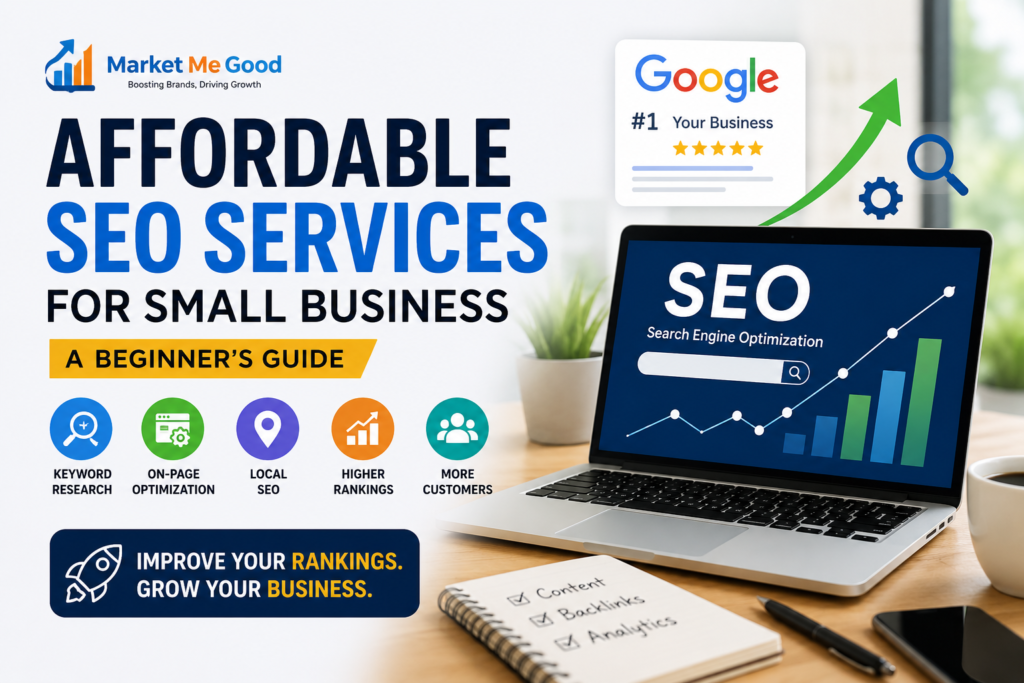
Affordable SEO Services for Small Business: A Beginner’s Guide | Market Me Good

Small Business SEO Affordable SEO Services for Small Business: A Beginner’s Guide You don’t need a six-figure marketing budget to show up on Google. Here’s what “affordable SEO” really means, what it costs, and how to spend that money well. If you run a small business, you’ve probably heard some version of this pitch: “Pay us and we’ll get you to page one of Google.” Some of those pitches are legitimate. Many are not. And in between the two, most small business owners are left wondering what SEO should actually cost, what it should include, and how to tell a fair price from a scam. This guide breaks that down in plain language β€” no jargon, no inflated promises, just what affordable SEO looks like when it’s done right, based on how small businesses in India and elsewhere are actually using it in 2026’s digital marketing landscape. Why SEO Matters for Small Businesses on a Budget Paid ads stop working the moment you stop paying for them. SEO (search engine optimization) is different β€” it’s the process of improving your website so it ranks higher in search results, which means people find you when they’re already looking for what you sell. For a small business, that’s often the highest-return marketing channel available, because you’re not paying per click for traffic that keeps arriving long after the work is done. The catch is that SEO is not instant. It typically takes a few months to show meaningful movement, which is exactly why “affordable” and “quick fix” rarely belong in the same sentence β€” and why it pays to understand the pricing before you commit. What “Affordable SEO” Actually Means Affordable doesn’t mean cheapest. It means the service is priced in a way that matches the size of your business and the results it’s realistically capable of producing. A local bakery and a national e-commerce brand should not be paying the same rate β€” and if two agencies quote wildly different numbers for the same scope of work, it’s worth asking why. Common pricing models explained Monthly retainer: A fixed monthly fee (commonly β‚Ή8,000–₹40,000 for small businesses in India) covering ongoing optimization, content, and reporting. Project-based: A one-time fee for a defined task, like a technical SEO audit or a website speed overhaul. Hourly consulting: Useful for businesses that want guidance but plan to do the implementation themselves. Most small business SEO packages fall into one of three pricing structures. Core SEO Services Every Small Business Needs Not every business needs every SEO service. But a handful of fundamentals apply almost universally, and any affordable package should cover these first before upselling anything more advanced. Local SEO If you serve customers in a specific city or neighborhood, local SEO is usually the fastest path to results. This includes optimizing your Google Business Profile, getting listed consistently across directories, and collecting reviews. Our complete guide to ranking in local search covers this in more depth, and even service-specific businesses β€” like the approach we outlined for local SEO for chiropractors β€” show how the same principles adapt across industries. On-page SEO This is the groundwork on your own website: page titles, meta descriptions, header structure, and keyword placement. It’s inexpensive to fix and often produces the earliest visible improvements. Content and blogging Regularly publishing helpful content builds topical authority and gives search engines more reasons to rank you. It also pairs naturally with promotion β€” many small businesses now combine blog content with a social media marketing strategy to get more mileage out of each piece. Technical SEO A slow, broken, or poorly structured website will undercut every other SEO effort. Before spending on content or links, it’s worth confirming your site itself is fast and crawlable β€” our guide to accelerating website performance walks through the basics. Rule of thumb: if an agency wants to sell you backlinks or advanced content before checking your site’s technical health, that’s a sign they’re optimizing for their invoice, not your results. How to Choose an Affordable SEO Agency Price alone tells you very little. What matters more is scope, transparency, and fit. Before signing anything, ask: What exactly is included each month, and what’s billed separately? Can you see examples of past client results, ideally in your industry or city? How is progress reported, and how often? What happens if you want to pause or leave β€” do you keep ownership of your content and rankings work? A good SEO services partner will answer all four without hesitation. If the answers are vague, treat that as your real price signal β€” not the number on the quote. DIY vs. Hiring an Expert: Budget Considerations Some small business owners start SEO themselves using free tools, and that’s a reasonable way to learn the basics. But DIY has a real cost too: your time. If an hour of SEO work saves you less than an hour of doing what actually makes you money, it’s usually cheaper to hire it out, even at a modest monthly rate, than to do it yourself. A practical middle ground many small businesses use: handle simple on-page fixes and review responses in-house, and outsource anything that requires ongoing technical or content expertise. Red Flags to Avoid When Hiring Cheap SEO Guaranteed #1 rankings β€” no one controls Google’s algorithm; guarantees are a warning sign, not a selling point. No visibility into what’s being done β€” you should always be able to see the actual changes made to your site. Suspiciously low, one-time flat fees β€” sustainable SEO requires ongoing work; a single β‚Ή2,000 payment “for life” rarely reflects real effort. Vague reporting β€” reports full of jargon and no plain-language explanation of results. Not sure what your website actually needs? Get a free audit and find out exactly where your SEO budget should go first. Get My Free SEO Audit A Simple 90-Day Affordable SEO Roadmap If you’re starting from scratch, here’s a realistic sequence that keeps costs manageable while building

Uncategorized

How New Digital Marketing Trends Drive Business Growth

Every year, digital marketing trends reshape the way brands find, engage, and convert customers β€” and 2026 is no exception. From AI-powered personalization to shoppable video, the businesses that adapt fastest to what’s new are the ones pulling ahead of their competitors. If you’re still relying on strategies from three years ago, you’re likely losing ground to competitors who’ve already moved on. In this guide, we’ll break down the trends actually driving results in 2026, and show you exactly how each one translates into real, measurable business growth. Why Digital Marketing Trends Matter for Business Growth Every shift in the marketing landscape reflects a shift in how real people search, browse, and buy. Ignore these changes, and your budget gets spent reaching an audience that has already moved on to newer platforms and formats. Follow them intelligently, and you unlock cheaper customer acquisition, stronger brand loyalty, and faster revenue growth. Consumers today expect personalized, fast, and authentic experiences from every brand they interact with. Businesses that track digital marketing trends closely can meet those expectations before their competitors do β€” and that head start compounds over time into a genuine competitive advantage. Top Digital Marketing Trends Shaping 2026 Let’s look at the specific trends driving results this year, and why each one deserves a place in your strategy. AI-Powered Personalization Artificial intelligence now sits at the center of nearly every high-performing marketing campaign. Instead of blasting the same message to an entire email list, AI tools analyze customer behavior in real time and generate tailored content, offers, and product recommendations for each segment β€” sometimes for each individual. Personalization is arguably the biggest of all current digital marketing trends because it directly affects revenue: consumers are significantly more likely to purchase from brands that deliver relevant, personalized content instead of generic messaging. For small and mid-sized businesses, this means AI-driven email flows, dynamic website content, and personalized retargeting ads are no longer optional extras β€” they’re baseline expectations. Growth impact: Higher conversion rates, better email open rates, and stronger customer retention. SEO: A Core Digital Marketing Trend in the AI Era SEO remains one of the most reliable growth channels for long-term, compounding results β€” but the rules have changed. AI-powered search results, answer engines, and voice assistants now summarize information before a user even clicks a link. This means your content needs to be structured, authoritative, and genuinely useful β€” not just keyword-stuffed. Businesses that invest in technical SEO, structured data, and high-quality content are showing up in both traditional search results and AI-generated answers, giving them two paths to visibility instead of one. Growth impact: Sustainable organic traffic, lower cost-per-acquisition compared to paid ads, and stronger domain authority over time. Short-Form and Shoppable Video Video consumption keeps climbing, and short-form, snackable content is winning attention across every platform. What’s new here is how quickly video is becoming transactional β€” shoppable video now lets viewers buy a product directly from a livestream or clip, turning passive viewing into an instant purchase. Connected TV (CTV) and streaming platforms are also emerging as serious performance channels, not just brand-awareness tools, giving businesses more places to convert attention into sales. Growth impact: Higher engagement rates, shorter paths to purchase, and better return on ad spend. Social Commerce and Community-Led Discovery More consumers now discover new brands through social content, creator recommendations, and online communities before ever typing a query into a search engine β€” using search mainly to validate a decision they’ve already started making. This is one of the more subtle but powerful shifts businesses need to plan around. Building an active social presence, partnering with relevant creators, and nurturing community engagement is now a discovery channel in its own right, not just a branding exercise. Growth impact: Wider top-of-funnel reach, improved brand trust, and new customer acquisition channels beyond paid search. Marketing Automation and Agentic AI Marketing automation has evolved well beyond scheduled emails. Agentic AI systems can now manage multi-step workflows β€” adjusting ad bids, testing creative variations, and optimizing campaigns with minimal manual input. Marketers are shifting from hands-on execution to strategic oversight, directing these systems rather than operating every lever themselves. This is one of the digital marketing trends with the biggest efficiency payoff: businesses can run more sophisticated campaigns without proportionally increasing their marketing headcount. Growth impact: Lower operational costs, faster campaign iteration, and more consistent performance across channels. Authentic, Human-Centered Content Strategy As AI-generated content floods the internet, authenticity has become a genuine competitive edge. Audiences are increasingly skeptical of polished, generic marketing and are gravitating toward brands that feel human, transparent, and trustworthy. This trend rewards businesses willing to show real people, real processes, and real results β€” case studies, behind-the-scenes content, and founder-led storytelling all perform strongly here. Growth impact: Stronger brand loyalty, higher engagement, and better word-of-mouth referrals. How to Turn Digital Marketing Trends into Business Growth Knowing the trends is only half the job β€” applying them strategically is what actually drives business growth. Here’s a practical approach Audit your current channels. Identify where you’re overinvesting in outdated tactics and underinvesting in emerging ones. Prioritize based on your audience. Not every trend fits every business; choose the two or three shifts most relevant to where your customers actually spend time. Test in small batches. Run limited pilots β€” a short video series, an AI-personalized email flow β€” before committing your full budget. Measure what matters. Track conversion rate, cost-per-acquisition, and customer lifetime value, not just impressions or likes. Iterate quickly. The pace of change in marketing today means last quarter’s winning formula can lose effectiveness fast, so build a culture of ongoing testing. Common Mistakes Businesses Make with New Digital Marketing Trends . FAQs About Digital Marketing Trends and Business Growth FAQs About Digital Marketing Trends and Business Growth What are the most important digital marketing trends for small businesses in 2026? β–Ό AI-powered personalization, SEO built for AI-driven search, short-form video, and authentic content are the highest-impact trends for

Digital Marketing Trends
Uncategorized

How New Digital Marketing Trends Drive Business Growth

Every year, digital marketing trends reshape the way brands find, engage, and convert customers β€” and 2026 is no exception. From AI-powered personalization to shoppable video, the businesses that adapt fastest to what’s new are the ones pulling ahead of their competitors. If you’re still relying on strategies from three years ago, you’re likely losing ground to competitors who’ve already moved on. In this guide, we’ll break down the trends actually driving results in 2026, and show you exactly how each one translates into real, measurable business growth. Why Digital Marketing Trends Matter for Business Growth Every shift in the marketing landscape reflects a shift in how real people search, browse, and buy. Ignore these changes, and your budget gets spent reaching an audience that has already moved on to newer platforms and formats. Follow them intelligently, and you unlock cheaper customer acquisition, stronger brand loyalty, and faster revenue growth. Consumers today expect personalized, fast, and authentic experiences from every brand they interact with. Businesses that track digital marketing trends closely can meet those expectations before their competitors do β€” and that head start compounds over time into a genuine competitive advantage. Top Digital Marketing Trends Shaping 2026 Let’s look at the specific trends driving results this year, and why each one deserves a place in your strategy. AI-Powered Personalization Artificial intelligence now sits at the center of nearly every high-performing marketing campaign. Instead of blasting the same message to an entire email list, AI tools analyze customer behavior in real time and generate tailored content, offers, and product recommendations for each segment β€” sometimes for each individual. Personalization is arguably the biggest of all current digital marketing trends because it directly affects revenue: consumers are significantly more likely to purchase from brands that deliver relevant, personalized content instead of generic messaging. For small and mid-sized businesses, this means AI-driven email flows, dynamic website content, and personalized retargeting ads are no longer optional extras β€” they’re baseline expectations. Growth impact: Higher conversion rates, better email open rates, and stronger customer retention. SEO: A Core Digital Marketing Trend in the AI Era SEO remains one of the most reliable growth channels for long-term, compounding results β€” but the rules have changed. AI-powered search results, answer engines, and voice assistants now summarize information before a user even clicks a link. This means your content needs to be structured, authoritative, and genuinely useful β€” not just keyword-stuffed. Businesses that invest in technical SEO, structured data, and high-quality content are showing up in both traditional search results and AI-generated answers, giving them two paths to visibility instead of one. Growth impact: Sustainable organic traffic, lower cost-per-acquisition compared to paid ads, and stronger domain authority over time. Short-Form and Shoppable Video Video consumption keeps climbing, and short-form, snackable content is winning attention across every platform. What’s new here is how quickly video is becoming transactional β€” shoppable video now lets viewers buy a product directly from a livestream or clip, turning passive viewing into an instant purchase. Connected TV (CTV) and streaming platforms are also emerging as serious performance channels, not just brand-awareness tools, giving businesses more places to convert attention into sales. Growth impact: Higher engagement rates, shorter paths to purchase, and better return on ad spend. Social Commerce and Community-Led Discovery More consumers now discover new brands through social content, creator recommendations, and online communities before ever typing a query into a search engine β€” using search mainly to validate a decision they’ve already started making. This is one of the more subtle but powerful shifts businesses need to plan around. Building an active social presence, partnering with relevant creators, and nurturing community engagement is now a discovery channel in its own right, not just a branding exercise. Growth impact: Wider top-of-funnel reach, improved brand trust, and new customer acquisition channels beyond paid search. Marketing Automation and Agentic AI Marketing automation has evolved well beyond scheduled emails. Agentic AI systems can now manage multi-step workflows β€” adjusting ad bids, testing creative variations, and optimizing campaigns with minimal manual input. Marketers are shifting from hands-on execution to strategic oversight, directing these systems rather than operating every lever themselves. This is one of the digital marketing trends with the biggest efficiency payoff: businesses can run more sophisticated campaigns without proportionally increasing their marketing headcount. Growth impact: Lower operational costs, faster campaign iteration, and more consistent performance across channels. Authentic, Human-Centered Content Strategy As AI-generated content floods the internet, authenticity has become a genuine competitive edge. Audiences are increasingly skeptical of polished, generic marketing and are gravitating toward brands that feel human, transparent, and trustworthy. This trend rewards businesses willing to show real people, real processes, and real results β€” case studies, behind-the-scenes content, and founder-led storytelling all perform strongly here. Growth impact: Stronger brand loyalty, higher engagement, and better word-of-mouth referrals. How to Turn Digital Marketing Trends into Business Growth Knowing the trends is only half the job β€” applying them strategically is what actually drives business growth. Here’s a practical approach Audit your current channels. Identify where you’re overinvesting in outdated tactics and underinvesting in emerging ones. Prioritize based on your audience. Not every trend fits every business; choose the two or three shifts most relevant to where your customers actually spend time. Test in small batches. Run limited pilots β€” a short video series, an AI-personalized email flow β€” before committing your full budget. Measure what matters. Track conversion rate, cost-per-acquisition, and customer lifetime value, not just impressions or likes. Iterate quickly. The pace of change in marketing today means last quarter’s winning formula can lose effectiveness fast, so build a culture of ongoing testing. Common Mistakes Businesses Make with New Digital Marketing Trends . FAQs About Digital Marketing Trends and Business Growth FAQs About Digital Marketing Trends and Business Growth What are the most important digital marketing trends for small businesses in 2026? β–Ό AI-powered personalization, SEO built for AI-driven search, short-form video, and authentic content are the highest-impact trends for

Uncategorized

Ultimate Guide to Accelerate Your Website Performance by Web Booster | Digital Happiness

Published on July 2024 | Read Time: 8 minutes Web Booster: The Ultimate Guide to Accelerate Your Website Performance & Maximize SEO Rankings Discover how Web Booster services can transform your online presence, improve website speed, and drive organic traffic growth πŸš€ Web Booster: Accelerate Your Digital Success πŸ“‹ Table of Contents Introduction to Web Booster Key Benefits of Web Booster Services Web Booster vs Traditional SEO How to Implement Web Booster Strategies Frequently Asked Questions Conclusion & Next Steps What is Web Booster? Understanding Website Performance Optimization In today’s fast-paced digital landscape, website speed and performance are no longer optional featuresβ€”they’re essential requirements for success. Web Booster is a comprehensive optimization service designed to enhance your website’s performance, user experience, and search engine rankings simultaneously. πŸ“Œ Key Insight: Studies show that 53% of mobile users abandon sites that take longer than 3 seconds to load. Web Booster services directly address this critical issue. At Digital Happiness (marketmegood.in), our Web Booster service combines cutting-edge optimization techniques with proven SEO strategies to ensure your website performs at its best. Whether you’re running an eCommerce platform, a service-based business, or a content-heavy blog, Web Booster enhances every aspect of your digital presence. πŸ’» Professional Website Performance Optimization The Web Booster approach encompasses multiple optimization layers: from technical improvements and server optimization to content delivery and user experience enhancements. This holistic methodology ensures that your website not only ranks higher on search engines but also provides visitors with an exceptional browsing experience. 0.1s Average Load Time Improvement 45% Increase in Conversion Rates 75% Boost in Organic Traffic 89% Better User Experience Metrics Key Benefits of Web Booster for Your Online Business Investing in Web Booster services delivers tangible results across multiple dimensions of your digital presence. Here are the primary advantages that make Web Booster a game-changer for businesses of all sizes: βœ… Improved Page Load Speed Web Booster optimization significantly reduces your website’s load time, ensuring visitors have immediate access to your content. Faster loading times directly correlate with better user engagement and reduced bounce rates. βœ… Enhanced SEO Performance Search engines prioritize fast-loading websites. By implementing Web Booster techniques, you naturally improve your SEO ranking and visibility on search engine results pages (SERPs), driving more qualified organic traffic to your site. βœ… Superior User Experience A optimized website with improved performance metrics creates a seamless browsing experience. Users stay longer, explore more pages, and are more likely to convert into customers or subscribers. βœ… Increased Conversion Rates Faster websites convert better. Web Booster services directly impact your bottom line by reducing friction in the customer journey and eliminating performance-related barriers to purchase. πŸ“Š Real Results from Web Booster Implementation Web Booster vs Traditional SEO: What’s the Difference? While traditional SEO services focus primarily on keyword optimization, link building, and content strategy, Web Booster takes a more comprehensive approach: Technical Performance Enhancement Web Booster focuses on the technical foundation of your website, including: Server Response Time Optimization: Ensuring your hosting infrastructure can handle traffic efficiently Image Optimization: Compressing and formatting images for faster delivery without quality loss Caching Strategies: Implementing browser and server-side caching to reduce load times Content Delivery Network (CDN): Distributing content across global servers for faster access Code Minification: Reducing CSS, JavaScript, and HTML file sizes Database Optimization: Streamlining queries and database performance These technical improvements complement your traditional SEO efforts, creating a synergistic effect that boosts both performance metrics and search rankings. πŸ’‘ Pro Tip: Combining Web Booster services with traditional Technical SEO strategies yields the best results. At Digital Happiness, we integrate both approaches for maximum impact. How to Implement Web Booster Strategies: A Step-by-Step Guide Implementing Web Booster optimization requires a systematic approach. Here’s how our optimization services work: Phase 1: Website Inspection & Audit We begin by conducting a detailed evaluation of your website’s current performance using industry-leading tools. This includes: Core Web Vitals assessment (Largest Contentful Paint, First Input Delay, Cumulative Layout Shift) Mobile and desktop performance analysis Speed testing across different geographic locations Technical SEO audit to identify optimization opportunities Next Steps: Based on the audit findings, we prioritize optimization opportunities that will deliver the greatest impact on your rankings and user experience. πŸ” Deep Performance Analysis & Optimization Phase 2: Deep Optimization Implementation Once we’ve identified opportunities, we implement comprehensive optimizations across multiple fronts: Infrastructure optimization (hosting, server configuration) Front-end performance enhancements Back-end database and query optimization Advanced caching implementation CDN setup and configuration Phase 3: Growth Analysis & Continuous Improvement Web Booster isn’t a one-time fixβ€”it’s an ongoing process. We continuously monitor your website’s performance, analyze growth metrics, and implement refinements to ensure sustained improvements and compliance with evolving search engine algorithms. 🎯 Real-World Impact Our clients typically see page load time reductions of 40-60% within the first 30 days, leading to immediate improvements in bounce rates, time on site, and conversion metrics. Web Booster β€” Frequently Asked Questions Web Booster Frequently Asked Questions Everything you need to know about how Web Booster improves site speed, search rankings, and conversions. ❓ How does Web Booster affect my SEO rankings? Web Booster directly impacts SEO through improved Core Web Vitals, which Google uses as ranking factors. Faster websites also have lower bounce rates, higher dwell time, and better user engagement signals β€” all factors that improve your SERP position. Our clients typically see 20–50% improvement in organic traffic within 2–3 months. ❓ How long does it take to see results from Web Booster optimization? You’ll notice immediate performance improvements β€” most sites see faster load times within days. However, SEO rankings typically improve within 4–8 weeks as search engines re-crawl and re-index your optimized pages. Sustained results continue to improve over 2–3 months as user engagement metrics improve. ❓ Is Web Booster suitable for eCommerce websites? Absolutely! eCommerce sites benefit tremendously from Web Booster optimization. Faster product pages lead to higher conversion rates, reduced cart abandonment, and improved customer satisfaction. We specialize in eCommerce optimization to maximize your sales potential. ❓

Uncategorized

Social Media Marketing in 2026 the Ultimate Guide to Growing Your Brand Online

Published by Digital Happiness | Your trusted partner for social media marketing, SEO, and digital growth Table of Contents Introduction What Is Social Media Marketing? Why Social Media Marketing Matters for Your Business Core Elements of a Winning Social Media Marketing Strategy Choosing the Right Social Media Platforms Content Ideas That Drive Engagement Measuring Success: Social Media Analytics Common Social Media Marketing Mistakes to Avoid How Digital Happiness Can Help FAQs Get Started Today Introduction In a world where your customers spend hours scrolling every single day, social media marketing is no longer optional; it’s the backbone of modern brand building. Whether you’re a small business owner in India or a growing eCommerce brand, a smart social media marketing strategy can turn casual followers into loyal, paying customers. At Digital Happiness, we specialize in helping brands like yours build a powerful online presence through data-backed social media management services. In this guide, we’ll break down everything you need to know to grow your business on social media in 2026 from strategy to execution to measurement. What Is Social Media Marketing? Social media marketing is the use of platforms like Instagram, Facebook, LinkedIn, X (Twitter), and YouTube to promote your brand, connect with your audience, and drive measurable business results, think traffic, leads, and sales. It combines content creation, community engagement, paid advertising, and analytics into one cohesive growth engine. Unlike traditional advertising, social media marketing is a two-way conversation. Brands that listen, respond, and adapt to their audience consistently outperform those that simply broadcast promotions. Why Social Media Marketing Matters for Your Business Here’s why every business regardless of size or industry | needs a solid presence on social media: If you’re also investing in Technical SEO or Local SEO, social media marketing amplifies those efforts by driving traffic and engagement signals search engines love. Core Elements of a Winning Social Media Marketing Strategy A results-driven social media marketing strategy typically includes: Choosing the Right Social Media Platforms Not every platform suits every business. Here’s a quick breakdown: Platform Best For Instagram Visual brands, eCommerce, lifestyle, fashion Facebook Local businesses, community building, older demographics LinkedIn B2B services, professional branding, recruitment YouTube Long-form storytelling, tutorials, product demos X (Twitter) Real-time updates, customer service, industry news Choosing the right mix depends on your audience and goals something our team maps out during every SEO Pricing and social strategy consultation. Content Ideas That Drive Engagement Struggling with what to post? Try these proven formats: Measuring Success: Social Media Analytics You can’t improve what you don’t measure. Track these key metrics monthly: At Digital Happiness, our reporting dashboards make it easy to see exactly how your social media marketing investment is performing check out real results in our Portfolio. Common Social Media Marketing Mistakes to Avoid How Digital Happiness Can Help At Digital Happiness, we don’t just post content we build social media marketing systems that grow your brand and your revenue. Our services include: Explore our full range of services on our Services page, learn more About Us, or browse real client results in our Portfolio. Social Media Marketing FAQs Frequently Asked Questions What does a social media marketing agency actually do? + A social media marketing agency plans, creates, and manages your content, paid advertising campaigns, and community engagement across multiple platforms. The goal is to increase brand awareness, attract qualified audiences, generate leads, and deliver measurable business growth. How often should I post on social media? + Most businesses achieve the best results by posting 3–5 times per week on platforms such as Instagram and Facebook, while maintaining daily engagement by responding to comments, messages, and customer inquiries. How long does it take to see results from social media marketing? + Organic social media growth typically begins showing noticeable improvements within 2–3 months. Paid social advertising, however, can generate website traffic, leads, and sales almost immediately after campaigns are launched. Which social media platform is best for my business? + The ideal platform depends on your target audience and business objectives. Instagram and Facebook are excellent for consumer-focused brands, while LinkedIn is highly effective for B2B companies and professional service providers. Do I need paid ads if I already post organically? + Yes. Combining organic content with paid advertising is the most effective strategy for sustainable growth. Paid campaigns help expand your reach beyond existing followers and accelerate lead generation and conversions. How much does social media management cost in India? + Social media management pricing depends on the number of platforms, content requirements, campaign complexity, and advertising budget. Contact Digital Happiness for a customized quote tailored to your business goals. Get Started Today Ready to turn your social media into a genuine growth channel? Let Digital Happiness build and manage a social media marketing strategy tailored to your brand. πŸ‘‰ Get Your Free Social Media Audit Contact Us: πŸ“§ Email: sam@marketmegood.in πŸ“ž Phone: +91 78891 19179 🌐 Website: www.marketmegood.in Follow us on Facebook, Twitter, and YouTube for daily digital marketing tips.

Uncategorized

The Complete Guide to Ranking Your Business in Local Search (2026)

SEO Keyword Targeting Type Keywords Primary Keyword Local SEO Secondary Keywords Local SEO services, Local SEO for small business, Google Business Profile optimization, Local SEO India, Local SEO strategy, Local SEO ranking factors, Local SEO agency If you run a business that serves customers in a specific city or neighborhood, showing up when nearby customers search on Google is one of the highest-ROI things you can do for your brand. That’s exactly what Local SEO helps you achieve. In this guide, we’ll break down everything you need to know β€” what local SEO is, why it matters, and a step-by-step strategy you can start using today. At Digital Happiness, local SEO is one of our core SEO services, and this guide reflects the same strategies we use to help our clients rank higher in their local markets. Table of Contents What Is Local SEO? Local SEO is the practice of optimizing your online presence so your business appears in location-based search results β€” think “coffee shop near me,” “SEO agency in Patiala,” or “best dentist in Chandigarh.” Unlike traditional SEO, which focuses on ranking nationally or globally, local SEO focuses on visibility within a specific geographic radius. It touches three main areas of Google: Why “Near Me” Searches Matter Searches with “near me” or “close by” intent have grown dramatically over the past few years because most searches now happen on mobile devices with location services enabled. If your business isn’t optimized locally, you’re invisible to a huge chunk of ready-to-buy customers. Why Local SEO Matters for Your Business Local SEO isn’t optional anymore β€” it’s foundational for any business with a physical location or a defined service area. Higher Intent, Higher Conversions People searching locally are usually closer to making a purchase decision than someone browsing generic informational content. Free, Long-Term Visibility Unlike paid ads, a well-optimized local presence keeps generating traffic without an ongoing ad spend. Builds Trust Through Reviews and Proximity Customers naturally trust businesses that show up with strong reviews and a nearby location. If you’re unsure where your business currently stands, you can request a free audit from our team to see exactly where the gaps are. How Local Search Ranking Works Google’s local algorithm evaluates three primary signals: Relevance How well your business profile and website match what the searcher is looking for. Distance How close your business (or service area) is to the location used in the search. Prominence How well-known and reputable your business is, based on reviews, links, citations, and overall online authority. Understanding these three pillars helps you prioritize where to focus your efforts first. Key Local SEO Ranking Factors Google Business Profile Optimization Your Google Business Profile (GBP), formerly Google My Business, is the single most important local SEO asset you own. Core GBP Elements to Optimize Common GBP Errors NAP Consistency & Local Citations NAP stands for Name, Address, Phone number. Google cross-checks your NAP details across the web to verify legitimacy. Where to Build Citations Even small inconsistencies like “St.” vs “Street” can quietly hurt your rankings. Online Reviews & Reputation Reviews influence both rankings and click-through rates. Best Practices for Review Generation On-Page Local SEO Your website itself needs to reinforce your local relevance. Essential On-Page Elements Example of Local Schema Markup Adding structured data helps search engines clearly understand your business name, address, hours, and service area, which can improve your chances of appearing in rich local results. Local Link Building Backlinks from other local, relevant websites signal prominence to Google. Local Link-Building Ideas Step-by-Step Local SEO Strategy If this feels like a lot to manage alongside running your business, our team at Digital Happiness handles the entire process for you from technical SEO to citation building and review management. Common Local SEO Mistakes to Avoid Tools to Track Local SEO Performance Frequently Asked Questions 1. What is the difference between SEO and local SEO? Traditional SEO focuses on ranking a website broadly, often nationally or globally, while local SEO specifically targets visibility for location-based searches and Google’s local map results. 2. How long does local SEO take to show results? Most businesses start seeing measurable movement in 3 to 6 months, though competitive industries and locations may take longer to see significant results. 3. Do I need a physical storefront for local SEO? No. Service-area businesses without a public storefront can still rank locally by setting a defined service area on their Google Business Profile. 4. How important are Google reviews for local ranking? Very important. Review count, rating, and recency are all factored into Google’s prominence signal, which directly affects your local ranking. 5. What is NAP consistency and why does it matter? NAP stands for Name, Address, and Phone number. Keeping this information identical across your website and all directories helps Google trust your business’s legitimacy. 6. Can I do local SEO myself, or do I need an agency? You can absolutely start on your own using the steps in this guide, but an experienced agency can accelerate results and avoid costly mistakes, especially for competitive markets. 7. Does local SEO work for online-only businesses? Local SEO is most effective for businesses with a physical location or a defined service area. Purely online businesses typically benefit more from national or niche SEO strategies. 8. How often should I update my Google Business Profile? Regularly β€” ideally weekly with a new photo or post, and immediately whenever your hours, services, or contact details change. 9. What is a local citation? A local citation is any online mention of your business’s name, address, and phone number, typically found in directories, review sites, and industry listings. 10. How much does professional local SEO cost? Costs vary based on your industry, competition, and goals. You can request a free audit to get a clear, tailored estimate for you contact us. email – sam@marketmegood.in +91 78891 19179 +91 78891 19179